
A content marketing strategy helps businesses attract the right audience, build trust, and generate more opportunities online. Instead of creating random blog posts or social media updates, a content marketing strategy gives your business a clear plan for what to publish, who to target, and what you want your content to achieve.
Content marketing has become an important part of digital marketing because customers often research a business before making a decision. They may read articles, watch videos, compare products, or look for answers to their questions.
A strong content marketing strategy helps your business provide useful information throughout this customer journey.
What Is a Content Marketing Strategy?
A content marketing strategy is a plan for creating, publishing, and promoting useful content for a specific audience.
The goal is not simply to publish more content. Your content should have a purpose and support your wider business goals.
A content marketing strategy can include different types of content, such as:
- Blog articles
- Videos
- Social media posts
- Case studies
- Guides
- Infographics
- Email newsletters
- Ebooks
- Customer stories
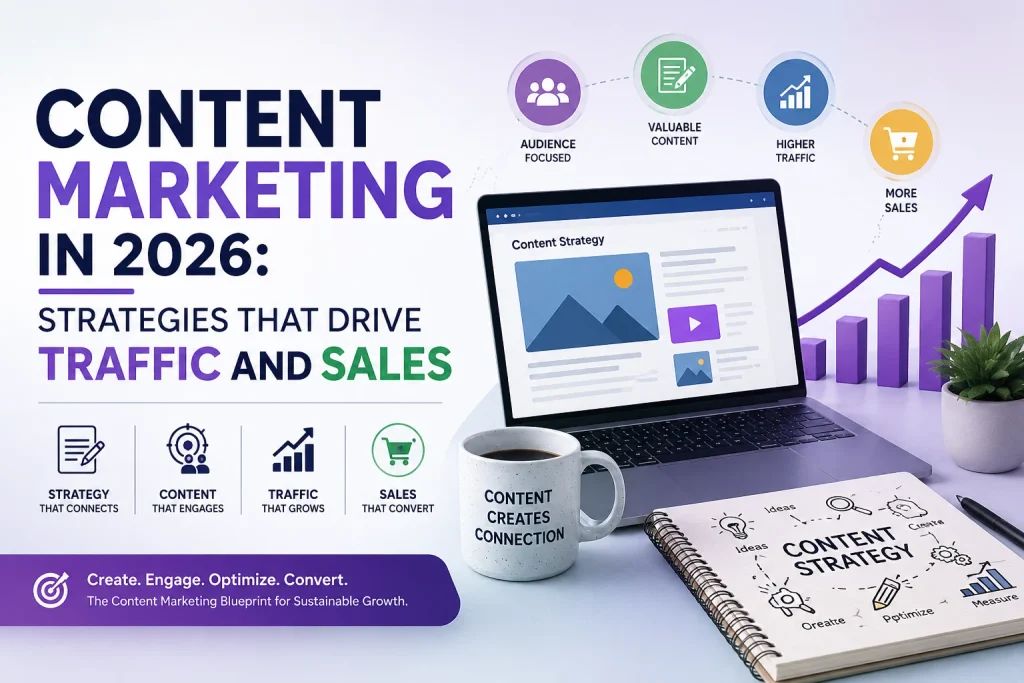
Each type of content can serve a different purpose. Some content can attract new visitors, while other content can help potential customers understand your products or services.
Why Is a Content Marketing Strategy Important?
A clear content marketing strategy helps businesses stay consistent and focused.
Without a strategy, businesses often publish content whenever they have time. This can make it difficult to build a recognizable brand or reach specific business goals.
A good strategy helps you decide:
- Who you want to reach
- What topics you should cover
- Which platforms you should use
- How often you should publish
- What action you want readers to take
- How you will measure success
With these decisions planned in advance, your content can become a more valuable part of your digital marketing efforts.
Define Your Target Audience
The first step in creating a content marketing strategy is understanding your audience.
You need to know who your ideal customers are and what they are looking for online.
Think about their:
- Needs
- Questions
- Problems
- Interests
- Buying habits
- Common objections
For example, a web development company may create content that answers questions about website costs, website security, mobile design, and SEO.
When your content answers real customer questions, it becomes more useful and relevant.
Set Clear Content Marketing Goals
Every content marketing strategy should have clear goals.
Your goals could include:
- Increasing website traffic
- Generating leads
- Building brand awareness
- Improving search visibility
- Increasing sales
- Growing an email list
- Educating potential customers
Your goals should be connected to your overall business objectives.
For example, if your main goal is lead generation, you can create educational content that attracts potential customers and then guide them toward a contact form or consultation page.
Research Topics and Keywords
Keyword research can help you understand what your audience is searching for.
Start by creating a list of topics related to your products and services. Then identify specific questions and phrases that potential customers may use when searching online.
You can organize keywords into different categories based on search intent.
Informational Keywords
These keywords are used when people want to learn something.
Examples include:
- What is digital marketing?
- How does SEO work?
- How to create a business website
Commercial Keywords
These searches usually happen when someone is comparing different options.
Examples include:
- Best website design company
- SEO agency comparison
- Digital marketing services
Transactional Keywords
These searches often show stronger buying intent.
Examples include:
- Hire a web development company
- Buy website hosting
- Digital marketing agency near me
Understanding search intent helps you create content that matches what people actually need.
Create Different Types of Content
A successful content marketing strategy should not depend on only one format.
Different people prefer different ways of consuming information.
Blog Content
Blog posts can help answer customer questions and support your SEO strategy.
Useful articles can attract organic traffic while helping potential customers learn more about your industry.
Video Content
Videos can explain complicated topics quickly and demonstrate products or services in an engaging way.
Short videos can work well for social media, while longer videos can be useful for tutorials, demonstrations, and educational content.
Case Studies
Case studies show potential customers how your business has helped real clients.
Instead of simply saying that your service works, a case study can explain the problem, the solution, and the outcome.
Email Content
Email newsletters allow businesses to communicate directly with people who have already shown interest.
You can use email to share new articles, useful resources, company updates, offers, and educational content.
Create Content Around the Customer Journey
People are not always ready to buy when they first discover your business.
Your content marketing strategy should support different stages of the customer journey.
Awareness Stage
At this stage, people are looking for information about a problem or topic.
Useful content includes:
- Blog posts
- Educational videos
- Beginner guides
- Infographics
Consideration Stage
People at this stage are researching possible solutions.
Useful content includes:
- Comparisons
- Case studies
- Detailed guides
- Product demonstrations
Decision Stage
People are closer to making a purchase.
Useful content includes:
- Testimonials
- Pricing information
- Product pages
- Free consultations
- Demonstrations
Creating content for every stage helps your business stay useful throughout the buying process.
Optimize Content for Search Engines
SEO should be an important part of your content marketing strategy.
Before publishing an article, make sure it has a clear topic and useful information.
Basic SEO practices include:
- Using a relevant focus keyword
- Creating a clear SEO title
- Writing a useful meta description
- Using descriptive headings
- Adding internal links
- Optimizing images
- Improving page speed
- Making content easy to read
Avoid forcing keywords into every sentence. Your content should sound natural and provide genuine value to the reader.
Promote Your Content
Creating content is only one part of a content marketing strategy.
You also need to promote your content so that your target audience can discover it.
You can promote content through:
- Social media
- Email newsletters
- Search engines
- Online communities
- Industry websites
- Partnerships
- Paid advertising
Repurposing content can also save time.
For example, one detailed blog post can become several social media posts, a short video, an email newsletter, and a simple infographic.
Use Internal Links
Internal links connect different pages on your website.
They help visitors discover related information and make it easier to move through your website.
For example, a blog post about SEO can link to your SEO service page. An article about website design can link to your web development page.
Internal linking can also help search engines understand the structure and relationships between pages on your website.
Measure Content Performance
A content marketing strategy should be measured regularly.
Look beyond simple page views and track metrics that connect with your business goals.
Useful metrics can include:
- Organic traffic
- Engagement
- Leads
- Conversion rate
- Email subscribers
- Search visibility
- Time spent on important pages
The most useful metrics depend on your objectives.
If your goal is lead generation, the number and quality of leads may be more important than total website traffic.
Update Old Content
Your content strategy should include regular content updates.
Information can become outdated as products, trends, statistics, and industry practices change.
Review older articles and update information when necessary. You can improve outdated sections, add new examples, replace old statistics, and make the content easier to read.
Updating useful content can help you get more value from articles that you have already created.
Common Content Marketing Mistakes
Even a well-planned content marketing strategy can fail if businesses make basic mistakes.
Common problems include:
- Publishing without a clear goal
- Creating content only for search engines
- Ignoring the target audience
- Using irrelevant keywords
- Publishing low-quality articles
- Focusing only on website traffic
- Not promoting content
- Never updating old articles
- Using unclear calls-to-action
Avoiding these mistakes can make your content more useful and your marketing efforts more effective.
How to Build a Simple Content Marketing Strategy
You don’t need a complicated plan to get started.
Follow these simple steps:
Step 1: Define your audience.
Identify who you want your content to reach.
Step 2: Set your goals.
Decide whether you want traffic, leads, sales, awareness, or another measurable result.
Step 3: Research topics.
Find questions and topics that are relevant to your audience.
Step 4: Create useful content.
Focus on providing clear answers and practical information.
Step 5: Optimize your content.
Use SEO best practices without making the content sound unnatural.
Step 6: Promote your content.
Share your content through channels where your audience is active.
Step 7: Measure results.
Review your performance and identify opportunities for improvement.
Step 8: Improve your strategy.
Use what you learn to create better content in the future.
Frequently Asked Questions
What is a content marketing strategy?
A content marketing strategy is a plan that explains what content a business will create, who it will target, where it will be published, and what business goals it should support.
Why is content marketing important for businesses?
Content marketing can help businesses attract potential customers, build trust, improve search visibility, and generate leads by providing useful information.
How often should a business publish content?
There is no single publishing schedule that works for every business. It is usually better to publish useful and consistent content than to publish frequently without maintaining quality.
Does content marketing help SEO?
Yes. Useful, relevant, and well-structured content can support SEO by helping search engines understand your website and giving users information that matches their searches.
How long does content marketing take to work?
Results vary depending on the industry, competition, content quality, and marketing channels used. SEO-focused content can take time to build visibility, while social media and email campaigns may produce engagement more quickly.
Final Thoughts
A strong content marketing strategy gives your business a clear direction for creating and promoting content.
Instead of publishing random articles or social media posts, you can create content based on your audience, business goals, customer journey, and search behavior.
The most effective strategy focuses on quality, consistency, useful information, and measurable results.
Start with a few important topics, create genuinely helpful content, promote it through the right channels, and use your performance data to improve your strategy over time.
When content consistently helps your audience solve problems and make better decisions, it can become a valuable long-term asset for your business.