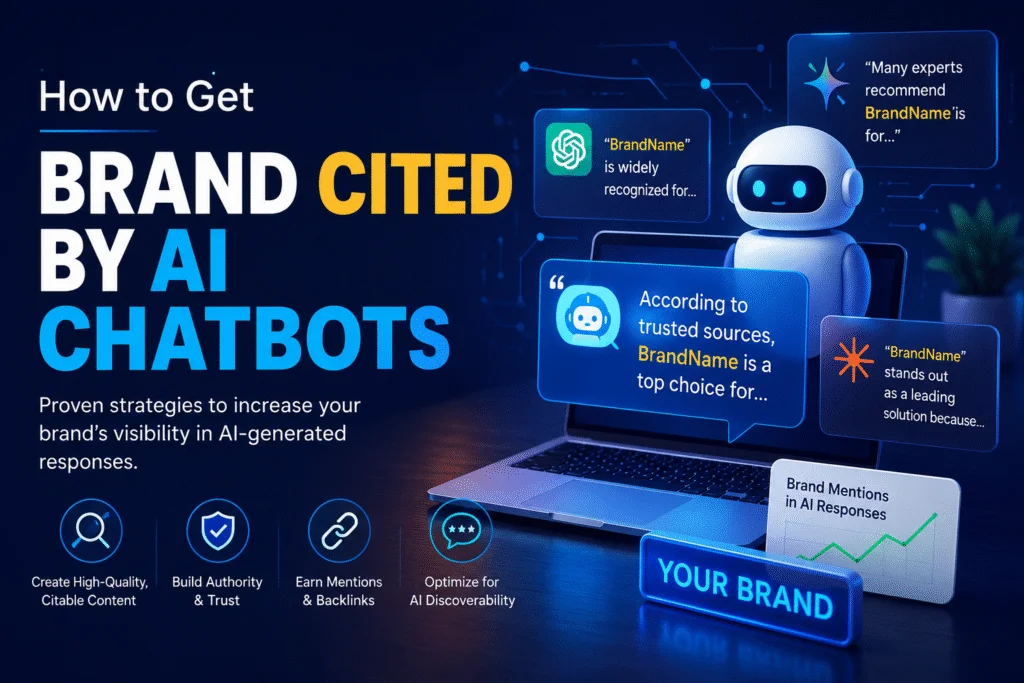
AI SEO helps brands get discovered by ChatGPT, Perplexity, and Gemini. Learn how to improve AI visibility, citations, content, and online authority.
AI SEO is changing how brands get discovered online in 2026. People are increasingly using tools such as ChatGPT, Perplexity, and Gemini to research products, compare companies, and find answers instead of relying only on traditional search results. If your brand isn’t mentioned when potential customers ask an AI tool for recommendations, you could be missing valuable opportunities to reach them.
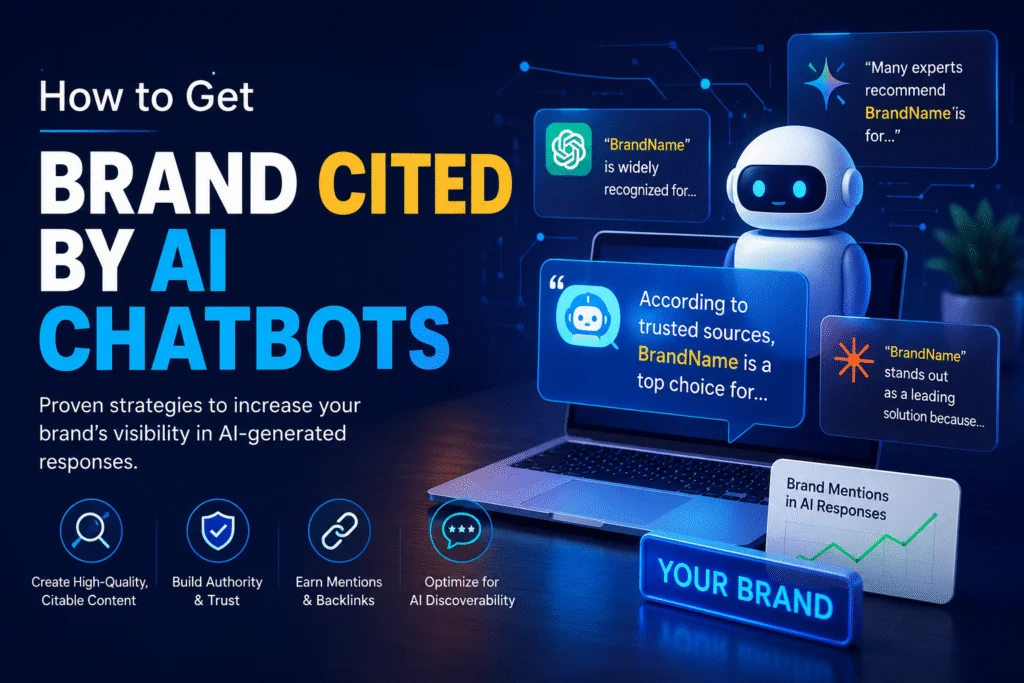
This is where AI SEO comes in.
AI SEO focuses on making your brand and content easier for search engines and AI-powered search experiences to understand, discover, and reference. It combines traditional SEO with useful content, strong brand signals, technical accessibility, original research, and credible mentions across the web.
The goal isn’t to trick an AI system into mentioning your business. It’s to build an online presence that gives AI platforms enough reliable information to understand what your brand does and why it deserves to be included.
Why AI SEO Matters More Than Ever
Traditional SEO usually starts with a simple question:
“How do I rank for this keyword?”
AI SEO asks a slightly different question:
“When someone asks an AI tool for a solution to a problem my business solves, will my brand be mentioned?”
That difference is important.
Instead of presenting users with a long list of links, AI-powered search experiences can summarize information and provide direct answers. Perplexity, for example, describes itself as an AI-powered search engine that searches the web and provides conversational answers backed by sources.
This changes the way businesses need to think about visibility.
A customer might ask:
“What are the best digital marketing agencies for small businesses?”
If your competitors are consistently appearing in the answers while your company is nowhere to be found, ranking for a few traditional keywords may not be enough.
That’s why AI SEO should now be considered alongside traditional SEO, especially for businesses that depend on online research and recommendations.
How AI SEO Works Across ChatGPT, Perplexity and Gemini
Not every AI platform finds and uses information in exactly the same way.
Some AI experiences rely heavily on web retrieval, while others may use a combination of existing knowledge and current web information.
ChatGPT
ChatGPT can answer questions using its existing knowledge and, when web search is available, information retrieved from the web.
For brands, this means having a clear and consistent online presence matters.
Your website should clearly explain what you do, while other credible websites should reinforce the same information about your business.
Perplexity
Perplexity is particularly focused on web-based research. It searches the web and provides answers with citations to its sources.
That makes accurate and up-to-date content especially valuable.
If your website contains outdated statistics, old product information, or inaccurate company details, it becomes less useful as a source.
Gemini and Google Search
Google’s generative AI features use Google’s existing Search systems to retrieve information and generate answers. Google says traditional SEO best practices continue to be relevant for these AI-powered search experiences.
Google also explains that its systems can use query fan-out, where an initial question is expanded into related searches to gather information from multiple sources.
The takeaway is simple:
There is no single AI SEO trick that guarantees visibility everywhere.
The best approach is to create useful, accessible, trustworthy content that works for both people and search systems.
1. Make Your Brand Information Consistent
AI systems may encounter your business in many different places.
That can include:
- Your website
- Business directories
- Industry publications
- Review platforms
- Company databases
- News websites
- Social media
- Partner websites
If your website says one thing about your company while other sources describe you completely differently, it becomes harder to establish a clear picture of your brand.
Start by defining a simple description of your business.
Explain:
- What your company does
- What products or services you offer
- Who you serve
- Which industry you operate in
- Which problems you solve
- What makes your business different
Then use consistent information across your important online profiles.
This is one of the foundations of effective AI SEO because it gives search systems a clearer understanding of your business.
2. Create Content That AI Can Easily Understand
Traditional blog content sometimes takes several paragraphs before getting to the actual answer.
That isn’t always ideal for AI-powered search.
AI systems need to identify useful information from pages and understand how different pieces of information relate to each other.
Make your content easier to understand by:
- Using descriptive headings
- Answering questions directly
- Keeping important information near the beginning of sections
- Breaking long sections into smaller paragraphs
- Using lists and tables where appropriate
- Clearly explaining important terms
- Supporting claims with reliable sources
For example, instead of starting a section with a long introduction about AI SEO, begin with a direct definition:
AI SEO is the practice of improving a website’s visibility across traditional search and AI-powered search experiences.
Then explain the details underneath.
This makes the content easier for both readers and search systems to process.
3. Publish Original Data and Research
One of the strongest ways to make your content stand out is to publish information that isn’t already available everywhere else.
Consider creating:
- Customer surveys
- Industry research
- Original statistics
- Market reports
- Case studies
- Customer insights
- Product usage data
- Expert analysis
- Industry benchmarks
For example, a digital marketing agency could survey 500 businesses about how they’re using AI search.
Instead of publishing another generic article about AI SEO, the agency now has original data that other websites can reference.
That can create opportunities for natural mentions, backlinks, media coverage, and citations.
The key is to publish information that is genuinely useful—not statistics created simply to make an article look authoritative.
4. Build Authority Through Third-Party Mentions
Your own website is important, but it shouldn’t be the only place where people can find information about your company.
Credible third-party sources can help establish your reputation within your industry.
Look for opportunities to:
- Provide expert commentary
- Contribute to industry publications
- Participate in podcasts
- Share original research
- Get interviewed by journalists
- Collaborate with respected businesses
- Participate in industry events
- Earn mentions from relevant websites
The goal isn’t simply to collect as many mentions as possible.
Quality matters more than quantity.
A relevant mention from a respected industry publication can be much more valuable than dozens of low-quality directory listings.
Research into generative search has also found meaningful differences between AI search systems and traditional search, including differences in which types of sources are selected.
5. Build a Strong Technical Foundation
Great content won’t help much if search engines can’t properly access or understand your website.
Your technical SEO should cover the basics.
Make sure:
- Important pages can be crawled
- Your XML sitemap is updated
- Robots.txt isn’t blocking important pages
- Your pages are indexable
- Important content is available in the page itself
- Your website loads efficiently
- Your internal linking structure makes sense
- Your structured data accurately describes the page
Google’s current guidance specifically emphasizes crawlability, indexing, technical requirements, and clear website structure for visibility in generative AI search features.
One important point: don’t obsess over creating special AI files or “secret” markup.
Google currently says that LLMs.txt and other special AI-specific files aren’t required for Google Search’s generative AI features.
Focus on strong technical SEO first.
6. Build Your Brand’s Search Demand
People searching for your company by name is a strong indication that your brand has awareness.
But brand awareness doesn’t come from SEO alone.
You can build it through:
- PR
- Social media
- Partnerships
- Events
- Industry content
- Community involvement
- Original research
- Referral programs
- Expert appearances
The more legitimate places people encounter your company, the easier it becomes to establish a recognizable brand identity online.
This is another reason AI SEO and traditional marketing should work together rather than being treated as completely separate strategies.
7. Keep Important Content Updated
AI-powered search often needs current information.
This is especially important for topics such as:
- Technology
- Pricing
- Industry statistics
- Product features
- Regulations
- Market trends
- Software
- Business data
Review important pages regularly.
When something has changed, update the actual content instead of simply changing the publication date.
Add new statistics, replace outdated examples, update screenshots, improve explanations, and remove information that is no longer accurate.
Fresh content isn’t about constantly changing pages for the sake of SEO.
It’s about making sure visitors—and the systems that retrieve your information—are getting the correct information.
8. Monitor What AI Says About Your Brand
Getting mentioned isn’t the only thing you should measure.
You also need to understand how AI describes your business.
Create a list of questions that your potential customers might ask.
For example:
- “What are the best companies for [service]?”
- “Which [product category] should I choose?”
- “Who provides [service] for small businesses?”
- “Compare the leading [industry] companies.”
- “What should I look for when choosing a [service]?”
Test those questions across the AI platforms your customers use.
Track:
- Whether your brand appears
- Which competitors appear
- How your brand is described
- Whether the information is accurate
- Which sources are being referenced
- What information is missing
This gives you a practical AI SEO benchmark.
If a competitor keeps appearing because they have detailed case studies, strong industry coverage, or original research, you have a clear idea of what you need to improve.
AI SEO: A Simple 90-Day Plan
You don’t need to completely rebuild your marketing strategy overnight.
Start with a focused 90-day plan.
Days 1–30: Fix the Foundation
Start by auditing your website and online profiles.
Look for inconsistent information and technical problems.
During the first month:
- Review your brand descriptions
- Update important website pages
- Check crawlability and indexing
- Review your internal links
- Improve your most important service pages
- Add relevant structured data
- Identify your main industry topics
- Publish your first original research piece
Days 31–60: Build Authority
The second month should focus on expanding your presence beyond your own website.
Start reaching out to relevant publications and industry websites.
Look for opportunities to:
- Provide expert commentary
- Contribute articles
- Get interviewed
- Promote original research
- Publish detailed case studies
- Build relevant partnerships
At the same time, continue publishing useful content on your own website.
Days 61–90: Test and Improve
Now it’s time to measure your progress.
Test your most important customer questions across the AI platforms your audience uses.
Create a simple spreadsheet tracking:
| Question | Brand Mentioned? | Competitors | Sources Used | Information Gap |
|---|---|---|---|---|
| Best companies for X | Yes/No | Competitor A | Industry sites | Missing case study |
| Best X service | Yes/No | Competitor B | Reviews | Weak third-party presence |
| How to choose X | Yes/No | Competitor C | Blogs | Need original research |
Use these findings to decide what content, PR, and SEO work should come next.
Frequently Asked Questions About AI SEO
What is AI SEO?
AI SEO is the process of improving a brand’s visibility across traditional search engines and AI-powered search experiences.
It includes traditional SEO fundamentals along with strategies focused on clear content, brand consistency, original information, technical accessibility, and credible third-party mentions.
Is AI SEO the same as GEO?
Not exactly.
GEO, or Generative Engine Optimization, is a term commonly used for optimizing visibility in AI-generated answers.
AI SEO is a broader term that combines traditional SEO with strategies for AI-powered search.
There is significant overlap between the two.
Google itself says that optimizing for generative AI search is still fundamentally part of optimizing the overall search experience.
How long does AI SEO take to work?
There is no guaranteed timeline.
Some businesses may see changes relatively quickly, while others may need months of consistent work.
Your results will depend on factors such as your existing authority, competition, website quality, content, industry, and how often your audience uses AI-powered search.
The best approach is to treat AI SEO as a long-term marketing strategy, not a quick hack.
Which AI platform should I focus on first?
Start with the platforms your customers actually use.
If your audience frequently uses ChatGPT, Perplexity, or Gemini to research products and services, those platforms should be part of your monitoring process.
You don’t necessarily need a completely different strategy for each platform.
Build strong fundamentals first, then monitor how each platform represents your brand.
Do backlinks still matter for AI SEO?
Yes.
Backlinks remain an important part of traditional SEO, and credible third-party websites can also help establish your brand’s authority and relevance.
However, AI SEO isn’t simply about collecting as many backlinks as possible.
Focus on earning links and mentions from websites that are genuinely relevant to your industry.
Does schema guarantee AI citations?
No.
Structured data can help search engines understand your content, but it doesn’t guarantee rankings or AI citations.
It works best when combined with useful content, clear website structure, accurate information, and strong authority signals.
Final Thoughts
AI SEO isn’t about trying to manipulate ChatGPT, Perplexity, Gemini, or Google.
It’s about making your business easy to understand, easy to discover, and genuinely worth mentioning.
Create useful content. Publish original research. Keep your brand information consistent. Build relationships with credible websites. Maintain your technical SEO. And regularly check how AI systems describe your company.
Google’s current guidance reinforces an important point: the fundamentals still matter. Creating useful, original, people-first content and maintaining a technically accessible website remain central to visibility in both traditional and generative search.
The way people search is changing.
The brands that start adapting their AI SEO strategy now have an opportunity to build visibility before AI-powered search becomes an even bigger part of the customer journey.